AI at work · 25 October 2026 · 5 min read
When Your AI Assistant Appears in the Org Chart
Microsoft’s four Modes of Work make the direction clear: AI is moving from answering prompts to building tools and holding responsibilities.
One slide joined it up
Assist. Delegate. Build. Automate.
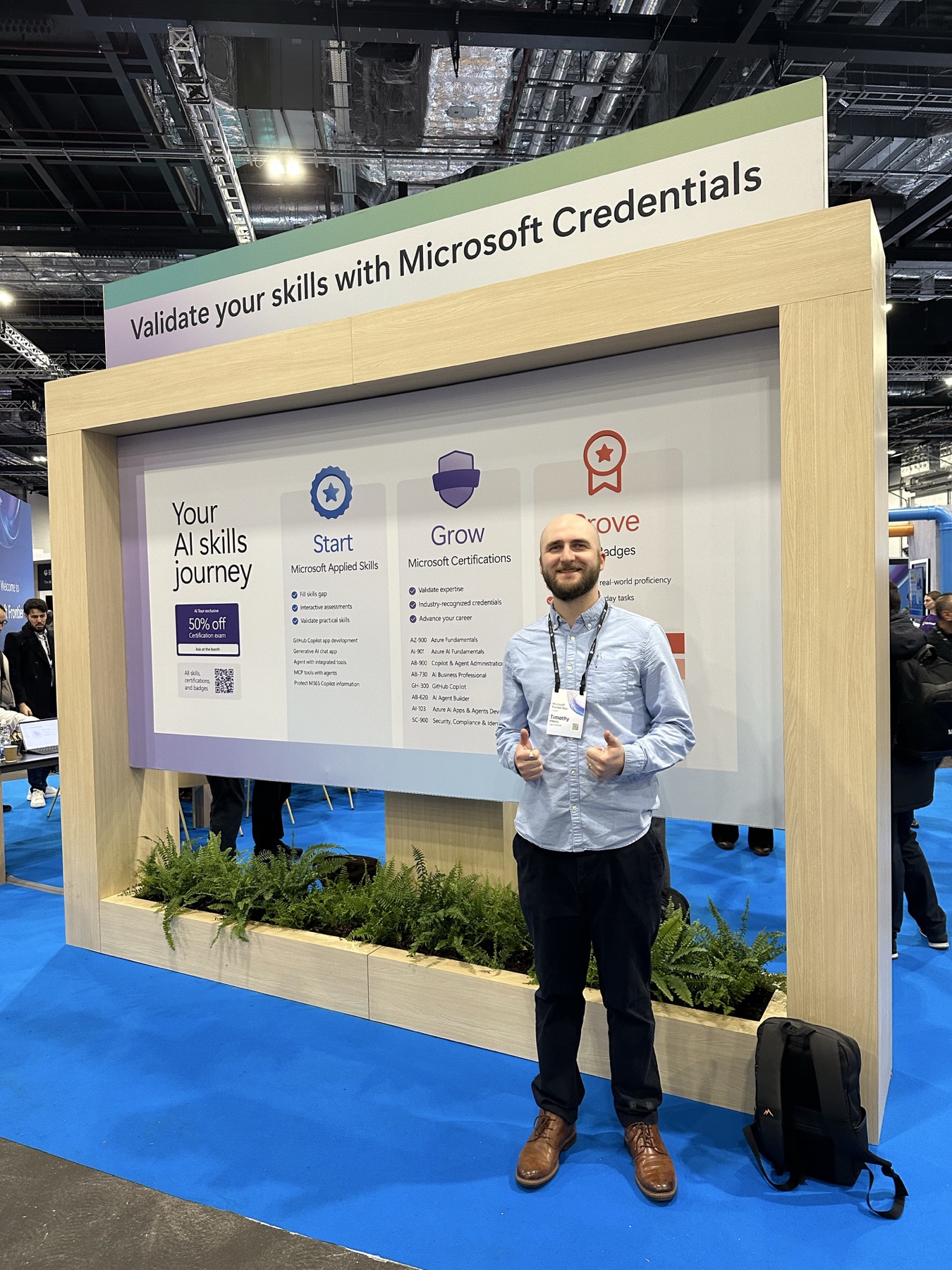
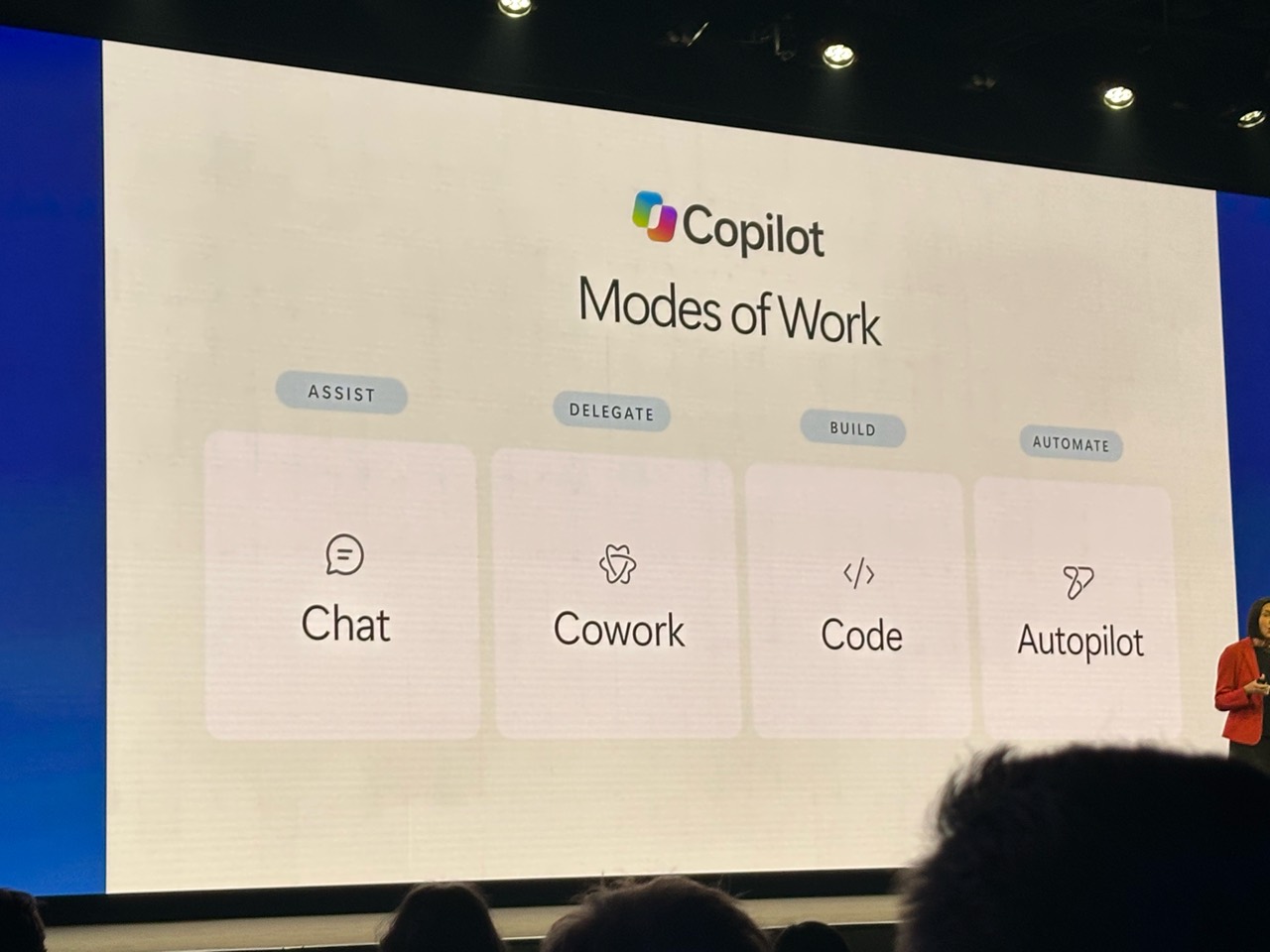
I attended the Microsoft Frontier Tour in London on 21 October. One slide pulled together much of what Microsoft is trying to do with Copilot.
It presented four Modes of Work: Chat to assist, Cowork to delegate, Code to build and Autopilot to automate.
Chat is the familiar starting point. I ask, refine and remain inside the conversation. Each mode after that moves another step away from the chat window. Cowork takes on an outcome. Code turns a description into software. Autopilot does not wait for me to open it at all.
That progression is the important technology story. Copilot is being shaped not only as somewhere to think, but as a route from intent to work that continues beyond a single prompt.
Assist
Chat
Ask, refine and create together.Delegate
Cowork
Hand over a defined outcome.Build
Code
Describe and generate a working tool.Automate
Autopilot
Give an agent a standing role.
From chat to delegation
Cowork changes who is driving.
Microsoft describes Cowork as a place to hand over work across Microsoft 365. It can plan a multi-step task, use specialised skills, prepare documents and propose actions for approval.
The distinction is not whether the output happens to be a spreadsheet or a presentation. In Chat, I am driving an exchange. In Cowork, I define the result and expect the system to carry more of the route to it.
Microsoft is also bringing Word, Excel and PowerPoint into the Copilot experience. Its established claim is that Copilot can create or update real, editable Office files alongside the conversation. I would not turn that into a claim that every desktop feature has moved into Copilot, but it does make Copilot a more plausible starting point for ordinary work.
Code to build
Low-code may be moving closer to real code.
The Code demonstration was the point where the direction felt concrete. I watched Copilot generate an interactive dashboard from natural language. It included a slider that changed a prediction parameter, so this was not a static page made to look impressive. The generated tool responded to input.
Microsoft also discussed handing that code to developers for deeper customisation. That is a meaningful shift. Visual low-code tools are unlikely to vanish, but natural language can become another abstraction above working code: a non-developer describes the what and why, then a developer can take control of the how when the solution needs to grow up.
Microsoft says Code can create apps, trackers, dashboards, automations and workflows in a sandboxed environment, with hosting inside the organisation’s tenant through Microsoft’s managed runtime.
The less glamorous dependency
Easy to build does not mean safe to trust.
Natural-language creation still depends on the skills, connections and integrations available to Copilot. A convincing dashboard can be easy to generate while its measures remain unreliable.
Without governed definitions, teams could create local measures and multiple sources of truth. A prompt telling Copilot which definition to use is guidance, not a guarantee of consistency.
One possible governed approach would be to connect generated tools to an approved Power BI semantic model and show which definition and source each measure used. That is my example of a safer architecture, not a claim that Microsoft Code automatically enforces it.
The barrier to creating software may fall. Ownership, permissions, testing and trusted data do not disappear with it.
Autopilot to automate
The important difference is identity.
Microsoft first introduced this direction as Scout. It later became Autopilot: a persistent, proactive agent that can continue working when its user is away.
The most interesting technical detail is not simply that it has memory or runs in the background. Microsoft Foundry defines an Autopilot through its identity. It has an Entra agent identity plus an agent user account, giving it its own email, calendar, OneDrive, Teams presence and position in the organisation chart. A human manager is responsible for it.
That allows the agent to act as itself in Microsoft 365 rather than borrowing the identity and permissions of whichever person happens to be signed in. Microsoft describes personal, group and company-wide patterns, each operating within boundaries the organisation sets.
What that felt like
A digital colleague changes the meaning of an action.
At the event, the Autopilot appeared in the Teams organisation chart under a human manager. It was not presented as a hidden workflow or another button. It looked closer to a digital colleague with an ongoing place in the organisation.
One example arranged a meeting with a busy person. That involves tedious diary checking and back-and-forth, and I would happily give it to an assistant.
Another example asked an Autopilot to chase somebody for a piece of work until the end of the day. My reaction was different. If my own assistant reminded me, that could feel supportive and relatively emotionless. If somebody else’s agent repeatedly chased me, it could feel controlling and imply that I was not trusted.
The underlying automation may be similar. Who the agent represents changes the human meaning around it.
Are businesses ready?
The questions begin after the demo works.
These are not arguments against Autopilot. They are open questions about deploying the technology well.
If agents are talking while people are not, have we improved collaboration or created more distance? If two agents have competing priorities, which shared objective resolves the conflict? A company-provided assistant may feel personal, but it still works inside company-owned identity, policy and data boundaries. In a sensitive employment situation, whose interests would it ultimately represent?
Before placing agents in an organisation chart, businesses will need to decide what each one owns, which systems it can reach, how actions are audited, who can stop it and when a decision must return to a person. Agent-to-agent work will also need norms, or automation could multiply competing requests at machine speed.
Microsoft’s own Frontier Tour coverage placed trust, human control, security and skills alongside technical capability. That feels like the right framing: the technology is impressive, but capability and organisational readiness have to move together.
An exciting leap
From answering prompts to holding responsibilities.
I left the Frontier Tour excited. Chat helps us think. Cowork begins to let us delegate. Code could let many more people turn an idea into a working tool. Autopilot goes further by giving an agent an ongoing role inside the organisation.
That is a major technical and organisational leap. The demos made it feel possible. They did not make it feel close to ordinary working life just yet.