Part 1 of 4
Getting the Mixers Out of the Cupboard
The quickest way to make the room feel more musical turned out to be giving some old kit a permanent job.
For a while, the mixers lived in the cupboard. That is a perfectly respectable place for a mixer to live if you only need it for a particular job. It is not, however, a brilliant place for the thing that could make you pick up a guitar and start playing.
Before this weekend, a jam had a fork in the road: use the guitar amp, or turn on the Mac, load Steven Slate Drums and do enough setup that the urge to play could quietly leave the building. Bringing the mixers back out gave the room a more immediate answer. It can make sound before the computer has had a chance to make a project of it.
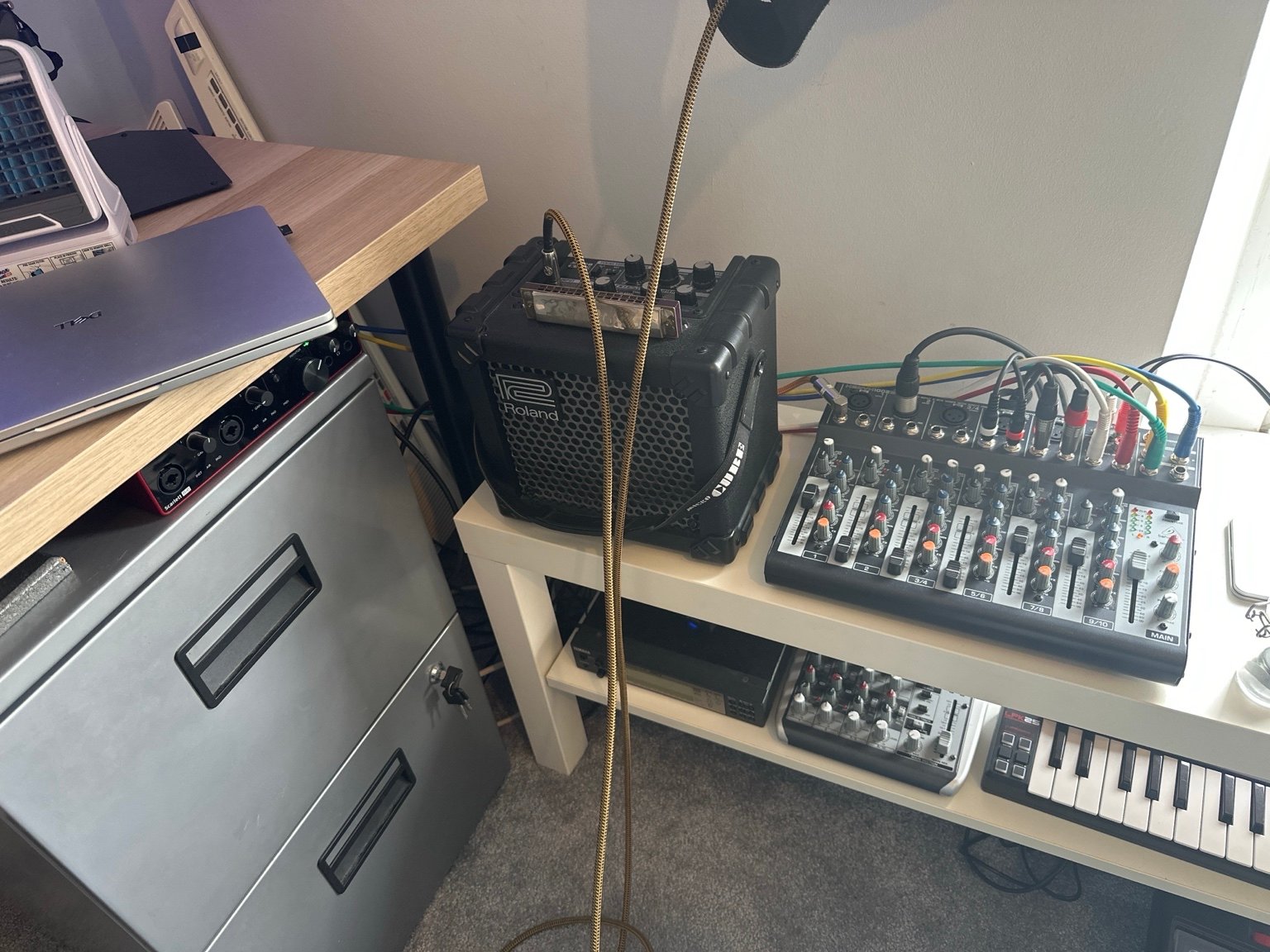
A guitar slot, not a negotiation
Guitar now has a clear route through the Cube and into the mixer. It means I can play with no Mac attached at all. Better still, if a mate arrives with a guitar, an amp and an understandably optimistic plan, there is a simple answer: plug into channel one. That is the guitar slot.
The labelled mixer looks gloriously unglamorous, which is exactly why it works. I no longer have to remember which lead went where last time. The tape output can feed the Roland drum kit; the headphone output is available again; and I am not constantly hot-swapping headphones just to hear what is going on.
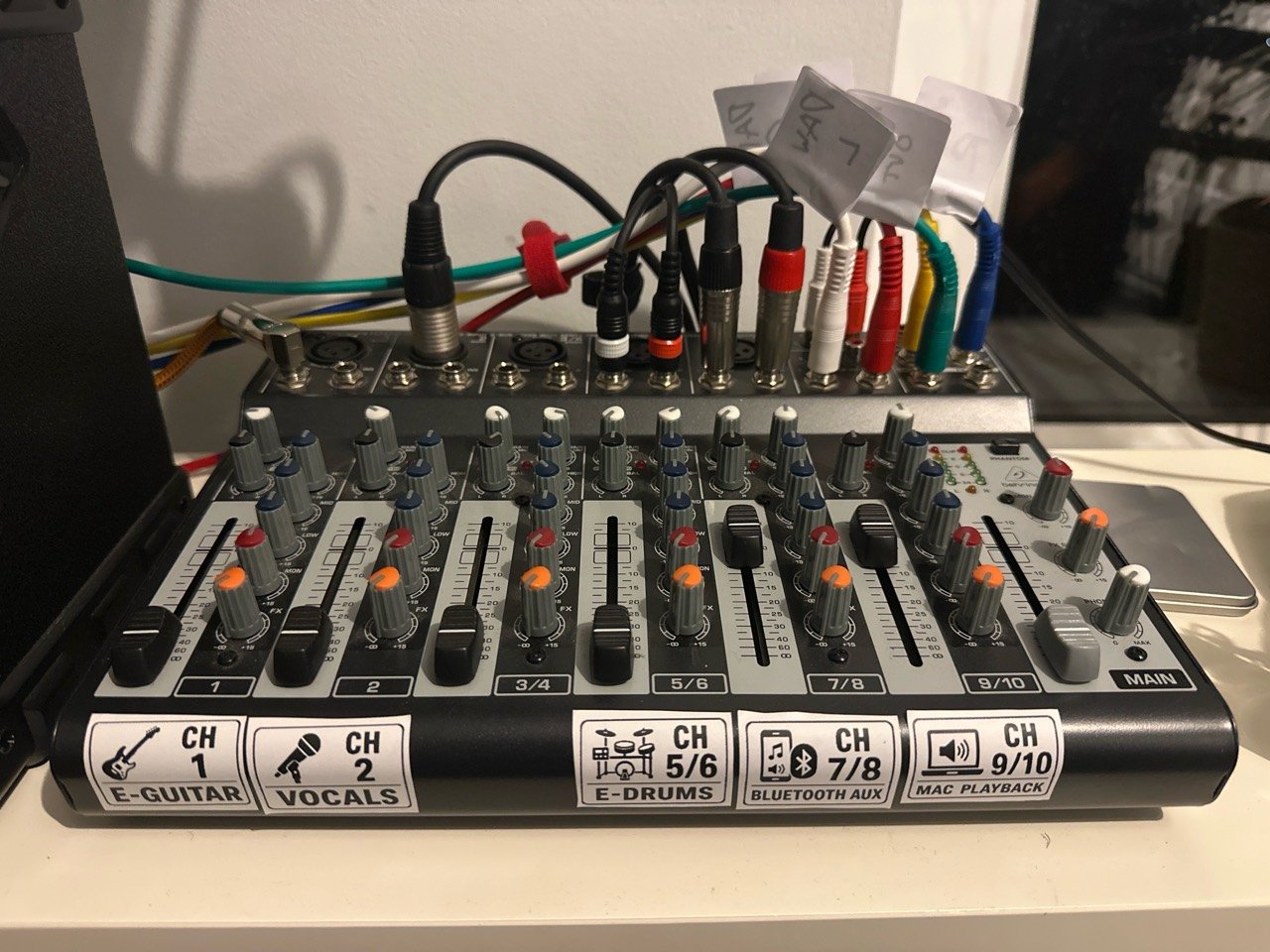
The routing breakthrough
I briefly considered buying another mixer just to control monitor volume, which felt like a lot of machinery for one knob. I also looked at little monitor-volume boxes. Then I realised the existing routing could do the work. Rearranging the outputs in Focusrite Control created a useful path between the interface, mixer and monitors, with practical control where I actually need it.
The Focusrite is part of a useful chain, not the story’s hero. The real payoff is a room where the main output reaches the interface, the monitors are practical to control, the drums can listen along, and the headphone socket is not forever being borrowed by the latest cable emergency.
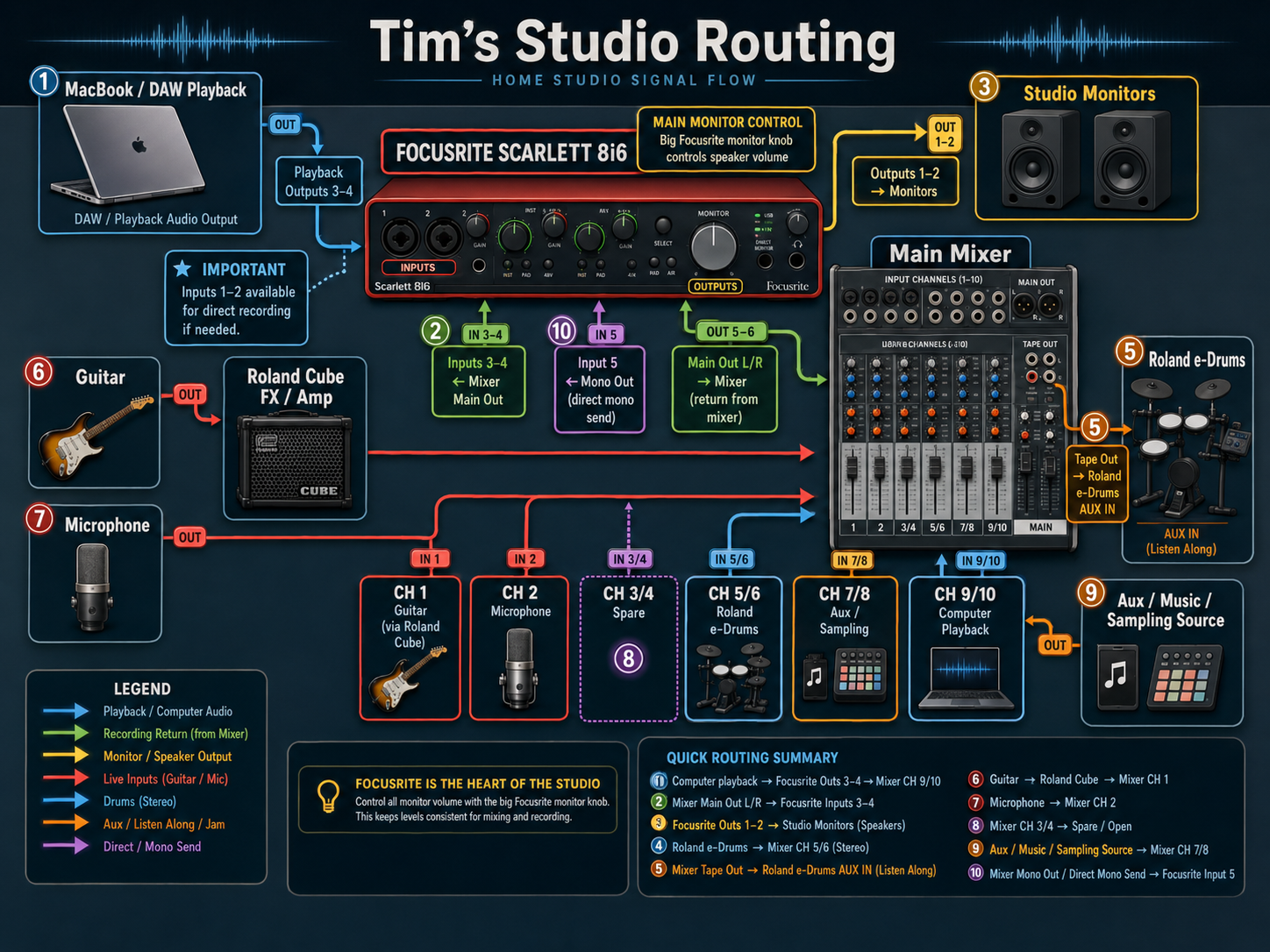
Cables are only exciting when they make playing easier. The mixer was once something I expected to bring out for live drums; now it has a permanent job because it makes the whole room more useful.